
Gun Crimes Law in India: Legal Provisions, Offenses, and Penalties
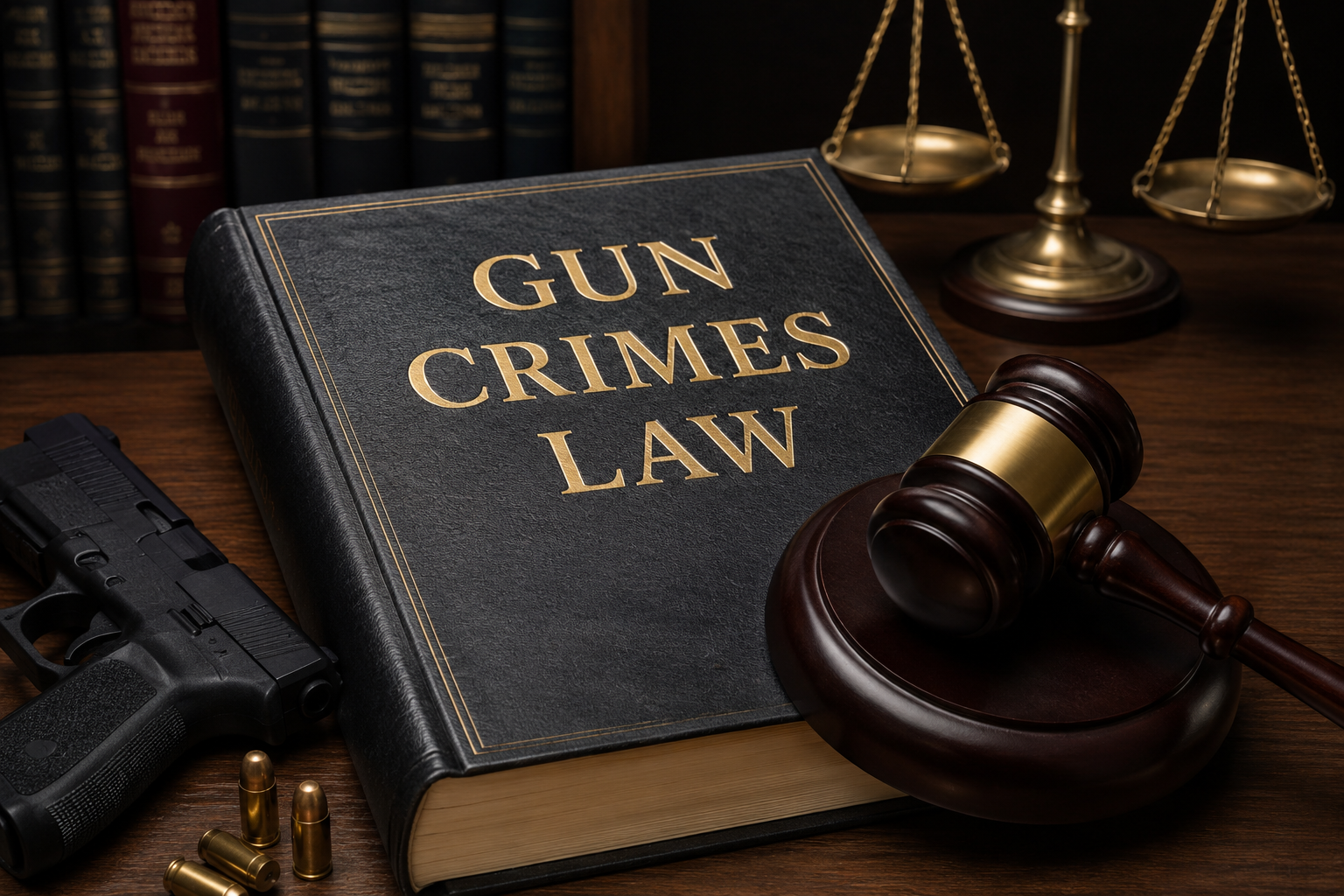
Gun-related offenses are treated as serious criminal matters under Indian law. Illegal possession, use, trafficking, manufacturing, or misuse of firearms can lead to severe legal consequences, including imprisonment, fines, and criminal prosecution. India has strict firearm regulations designed to maintain public safety, prevent violent crimes, and control unauthorized weapons.
Gun crimes may involve unlawful possession of firearms, use of weapons during criminal activities, illegal arms trading, firing in public places, or possession of prohibited weapons without valid authorization. Such offenses are primarily governed by the Arms Act, 1959, the Arms Rules, 2016, and relevant provisions of the Bharatiya Nyaya Sanhita (BNS) and other criminal laws.
Understanding gun crime laws in India is essential for individuals, firearm license holders, legal professionals, and businesses dealing with security-related activities.
What Is a Gun Crime?
Gun crimes refer to criminal offenses involving firearms, ammunition, or prohibited weapons. These crimes may include:
- Illegal possession of firearms
- Use of guns in violent crimes
- Arms trafficking
- Illegal manufacturing of weapons
- Possession of prohibited arms
- Carrying firearms without a valid license
- Firing weapons in public places
- Threatening individuals with firearms
Gun-related offenses are investigated seriously because they directly impact public safety and law enforcement.
Arms Act, 1959
The Arms Act, 1959 is the primary legislation regulating firearms and ammunition in India. The law governs:
- Possession of firearms
- Licensing requirements
- Manufacture and sale of arms
- Import and export of weapons
- Restrictions on prohibited arms
The Act aims to prevent illegal weapons circulation and misuse of firearms.
Firearm Licensing in India
In India, possessing a firearm generally requires a valid arms license issued by the competent authority.
License Requirements
Applicants seeking a firearm license may need to:
- Submit identity and address proof
- Demonstrate genuine need or threat perception
- Undergo background verification
- Satisfy eligibility conditions
Licenses are granted under strict scrutiny by authorities.
Grounds for License Rejection
Authorities may refuse licenses in cases involving:
- Criminal background
- Threat to public safety
- Mental instability
- False information in applications
Possessing firearms without proper authorization is a punishable offense.
Common Gun-Related Offenses
Illegal Possession of Firearms
Possessing a firearm or ammunition without a valid license is a criminal offense under the Arms Act.
Illegal possession may involve:
- Pistols
- Revolvers
- Rifles
- Shotguns
- Ammunition
- Prohibited weapons
Punishment depends on the type of weapon and seriousness of the offense.
Use of Firearms in Criminal Activities
Using guns during offenses such as:
- Robbery
- Murder
- Kidnapping
- Extortion
- Assault
can lead to enhanced criminal charges and stricter punishment.
Arms Trafficking
Illegal sale, transport, import, or distribution of weapons is considered a grave offense.
Arms trafficking networks often involve organized crime and national security concerns.
Possession of Prohibited Weapons
Certain weapons are prohibited or highly restricted under Indian law.
Unauthorized possession of prohibited arms may result in severe punishment, including long-term imprisonment.
Firing in Public Places
Negligent or intentional firing in public places that endangers safety may lead to criminal prosecution under arms and public safety laws.
Punishments Under Gun Crime Laws
Punishment for firearm-related offenses varies depending on:
- Nature of the offense
- Type of weapon involved
- Criminal intent
- Public safety impact
Penalties may include:
- Imprisonment
- Heavy fines
- Seizure of weapons
- Cancellation of arms licenses
Serious offenses involving organized crime or violent acts may attract stringent punishment.
Investigation of Gun Crimes
Gun-related crimes are investigated by law enforcement agencies through:
- Weapon recovery
- Ballistic examination
- Forensic analysis
- Fingerprint investigation
- Witness statements
- CCTV footage analysis
Forensic evidence often plays a major role in firearm-related prosecutions.
Ballistics and Forensic Evidence
Ballistic experts analyze:
- Bullet trajectories
- Firearm markings
- Cartridge cases
- Gunshot residue
These examinations help determine:
- Type of firearm used
- Shooting distance
- Weapon ownership links
- Connection to crime scenes
Forensic science is critical in modern gun crime investigations.
Self-Defense and Firearm Use
Indian law recognizes the right of private defense under certain circumstances. However, use of firearms in self-defense must satisfy legal conditions.
The force used should be:
- Necessary
- Reasonable
- Proportionate to the threat
Excessive or unlawful use of firearms may still result in criminal liability.
Gun Crime and Organized Crime
Illegal firearms are frequently associated with:
- Gang violence
- Terrorism
- Drug trafficking
- Extortion rackets
- Contract killings
Law enforcement agencies closely monitor illegal arms networks to prevent violent criminal activities.
Rights of Accused Persons
Individuals accused in firearm-related cases have legal rights, including:
- Right to legal representation
- Right to fair investigation
- Right to bail where applicable
- Protection against unlawful detention
- Right to present defense evidence
Criminal defense lawyers play an important role in protecting legal rights during investigations and trials.
Role of Criminal Lawyers in Gun Crime Cases
Experienced criminal lawyers assist clients in:
- Bail applications
- Defense strategy preparation
- Challenging illegal searches or seizures
- Reviewing forensic evidence
- Court representation
- Appeals against convictions
Professional legal representation is essential in serious firearm-related cases.
Illegal Arms and National Security
Unauthorized weapons pose major risks to:
- Public safety
- National security
- Law enforcement operations
Strict firearm laws help prevent illegal arms circulation and violent criminal activity.
Gun Crime Prevention Measures
Authorities take several preventive steps, including:
- Strict licensing procedures
- Police verification systems
- Arms inspections
- Border surveillance
- Anti-trafficking operations
- Public awareness campaigns
These measures aim to reduce firearm-related violence and unlawful weapon possession.
Importance of Legal Compliance for Firearm Owners
Licensed firearm owners must comply with:
- Safe storage requirements
- License renewal procedures
- Restrictions on weapon use
- Ammunition regulations
- Reporting obligations
Failure to follow legal conditions may lead to license suspension or criminal prosecution.
Conclusion
Gun crimes are treated as serious offenses under Indian law due to their direct impact on public safety and security. The Arms Act, 1959 and related criminal laws regulate firearm possession, licensing, and use while imposing strict penalties for illegal weapons and gun-related offenses.
Whether involving illegal possession, arms trafficking, public firing, or use of firearms in criminal acts, gun crime cases require careful investigation, forensic analysis, and professional legal handling. Understanding firearm laws, licensing obligations, and criminal liabilities is essential for ensuring compliance and preventing legal complications.
Strong enforcement of gun laws plays an important role in maintaining law and order, protecting citizens, and preventing violent crime in society.